● OWNERSHIP LENS · FILED PORTFOLIOS · KEY S
13F holdings, read as portfolios instead of filings
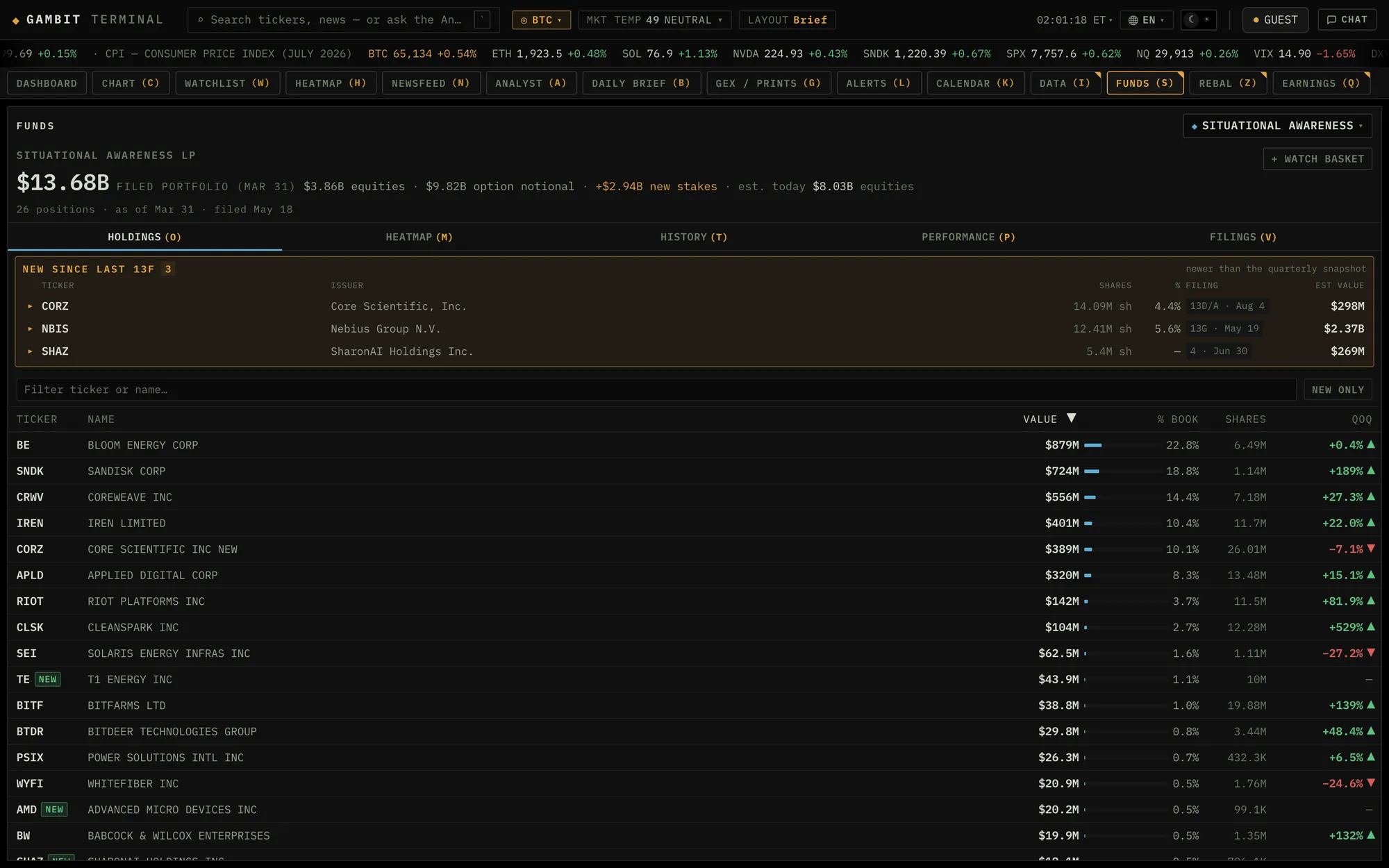
Every quarter, funds managing over $100M must file their US equity holdings with the SEC on Form 13F. Gambit's funds desk renders those filings as portfolios: holdings ranked by value, new stakes since the last filing, and quarter-over-quarter changes. One captured portfolio shows $13.68B across 26 positions. Key s opens it.
AS OF 10 AUGUST 2026 · SOURCE: GAMBIT · FIGURES BELOW ARE FROM A 10 AUGUST 2026 CAPTURE, NOT LIVE · CURRENT VALUES IN THE TERMINAL ↗
How to read it
What this tells you, and what it does not
What this tells you
What an institutional investment manager disclosed holding at the end of a quarter, and how that disclosed portfolio changed against the previous filing: what is new, what grew, what shrank and what left.
What it does not tell you
It does not disclose short equity positions, written options, many non-US securities, or anything traded after quarter-end, and it is not the manager's complete book. Certain long options, warrants and convertible securities are reportable and do appear. A position that looks larger may simply have appreciated, so read the share count rather than the value before calling it buying.
What to inspect next
Put a disclosed holding on your watchlist, check whether it reports soon, or read the quarter-end context against what the feed has carried since.
The mechanism
From filing to signal
A raw 13F is a table of CUSIPs. Gambit's funds desk turns it into the three questions that matter: what does the fund hold now (ranked by value, with portfolio weights), what is new since the prior quarter, and what grew or shrank. Form 13F is generally due within 45 days of quarter-end, and late filings, amendments and confidential treatment can push public visibility later still, so the desk treats a filing as what it is, a dated quarterly snapshot of disclosed positioning rather than a live feed, and stamps the filing date on everything.
Questions
What is a 13F filing?
A quarterly SEC form. Institutional investment managers exercising investment discretion over at least $100 million in Section 13(f) securities generally have to file one, disclosing those holdings. It does not disclose short equity positions, written options, many non-US securities, or the manager’s complete book, though certain long options, warrants and convertible securities are reportable and do appear.
What does the funds desk show?
Filed portfolios rendered as rankings: holdings by value with weights, new stakes since the previous filing, and quarter-over-quarter position changes. A captured example shows $13.68B across 26 positions.
How current is 13F data?
Form 13F is generally due within 45 days after a quarter ends, and that is a deadline rather than a guarantee: late filings, amendments and confidential treatment requests can delay public visibility further. The desk stamps the filing date on everything and never presents a 13F as live positioning.
Keep going